1 / 4
Work No. 106 — 2025
Some symbols do not belong to history. They belong to identity — and there is a difference.
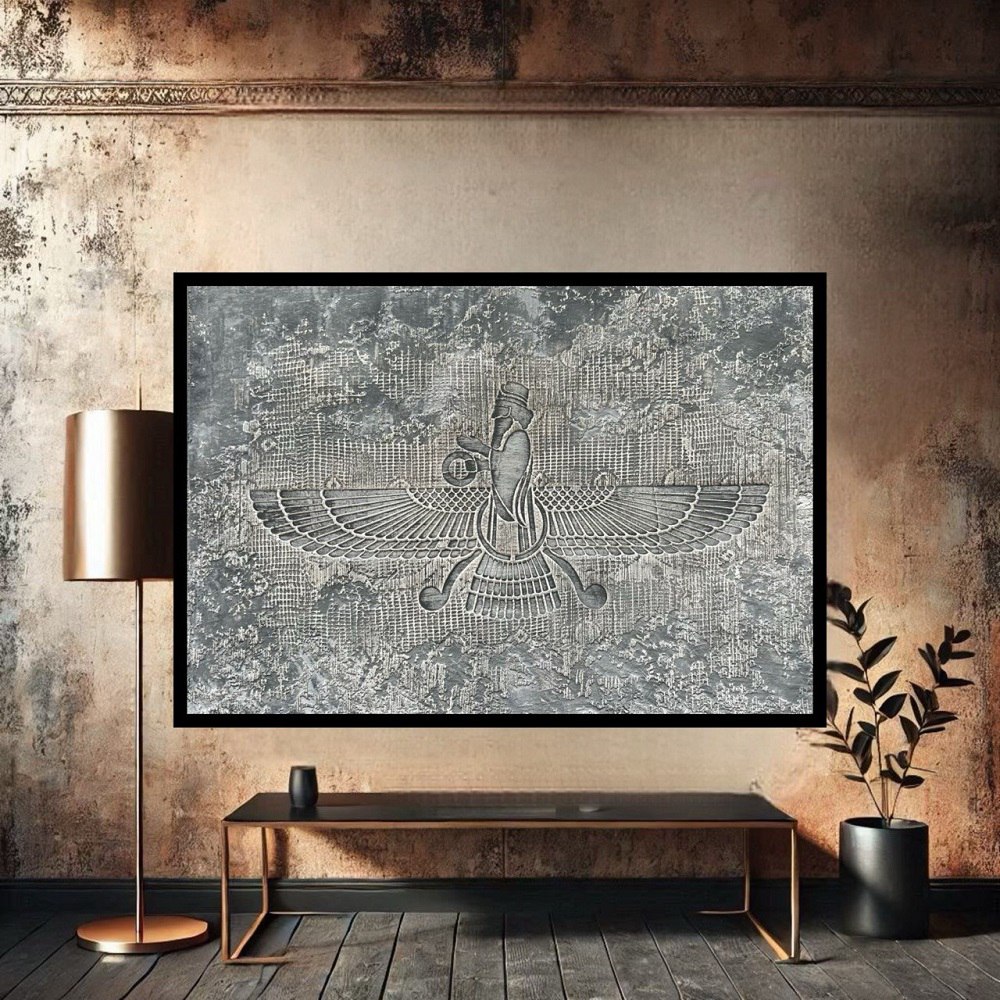
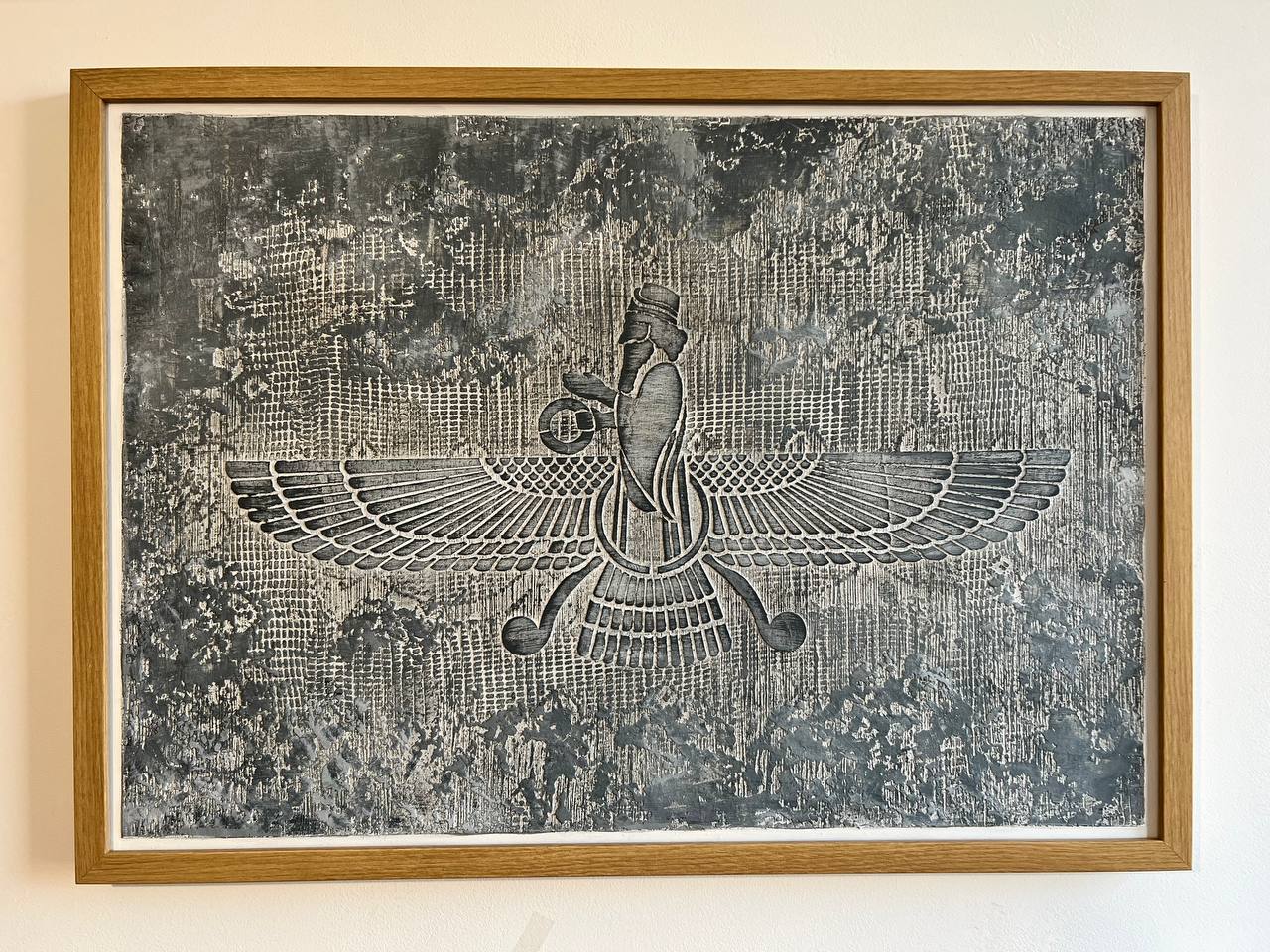
The Faravahar is one of the oldest and most enduring symbols of Persian civilisation, predating empires and outlasting them. The winged figure rising from the disc represents the human soul in its eternal journey — upward, always upward — guided by good thought, good word, and good deed. For thousands of years it watched over kings and common people alike from the walls of Persepolis. Today it watches over a canvas, and asks the same question it has always asked: which direction are you moving?
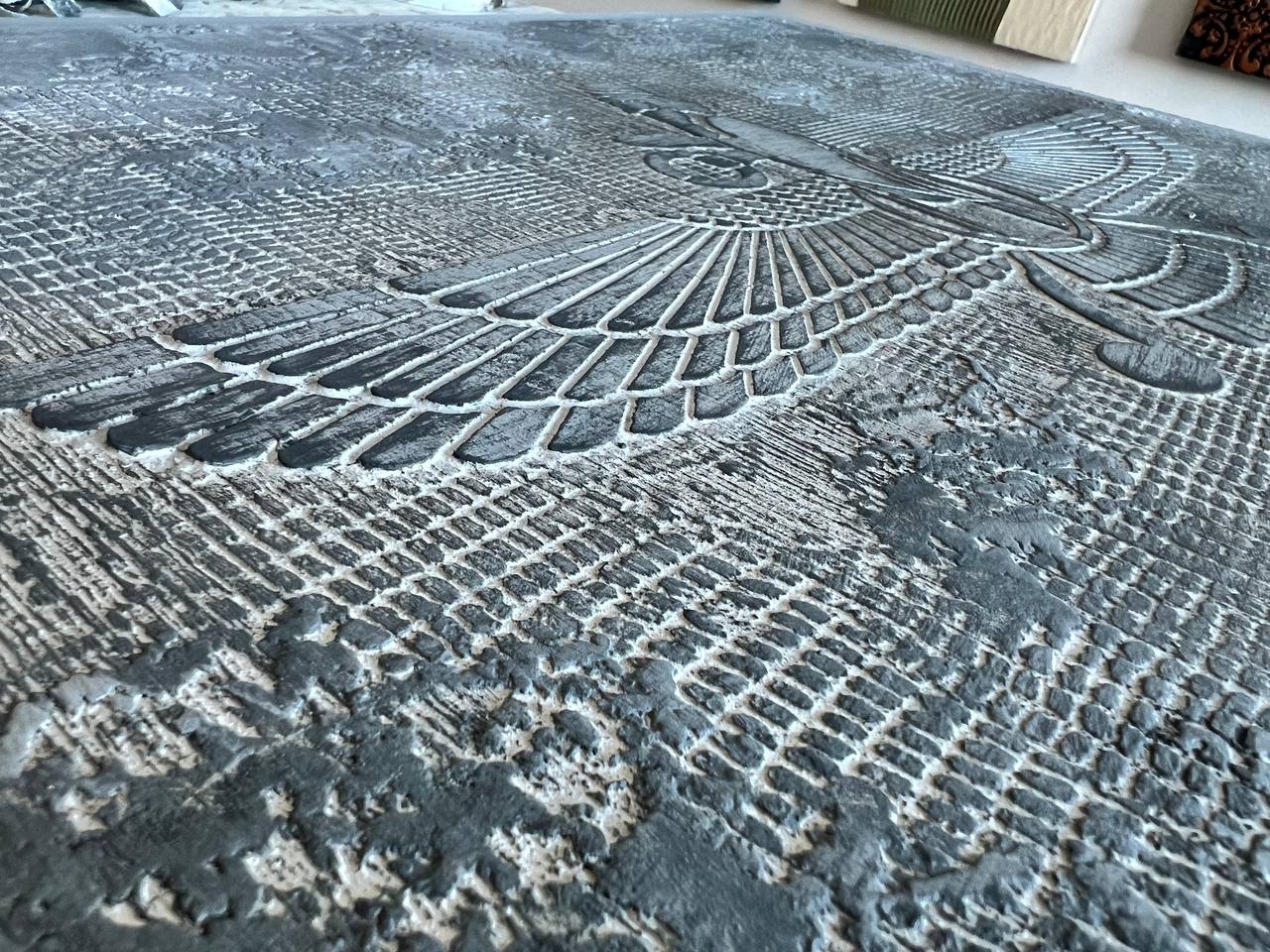
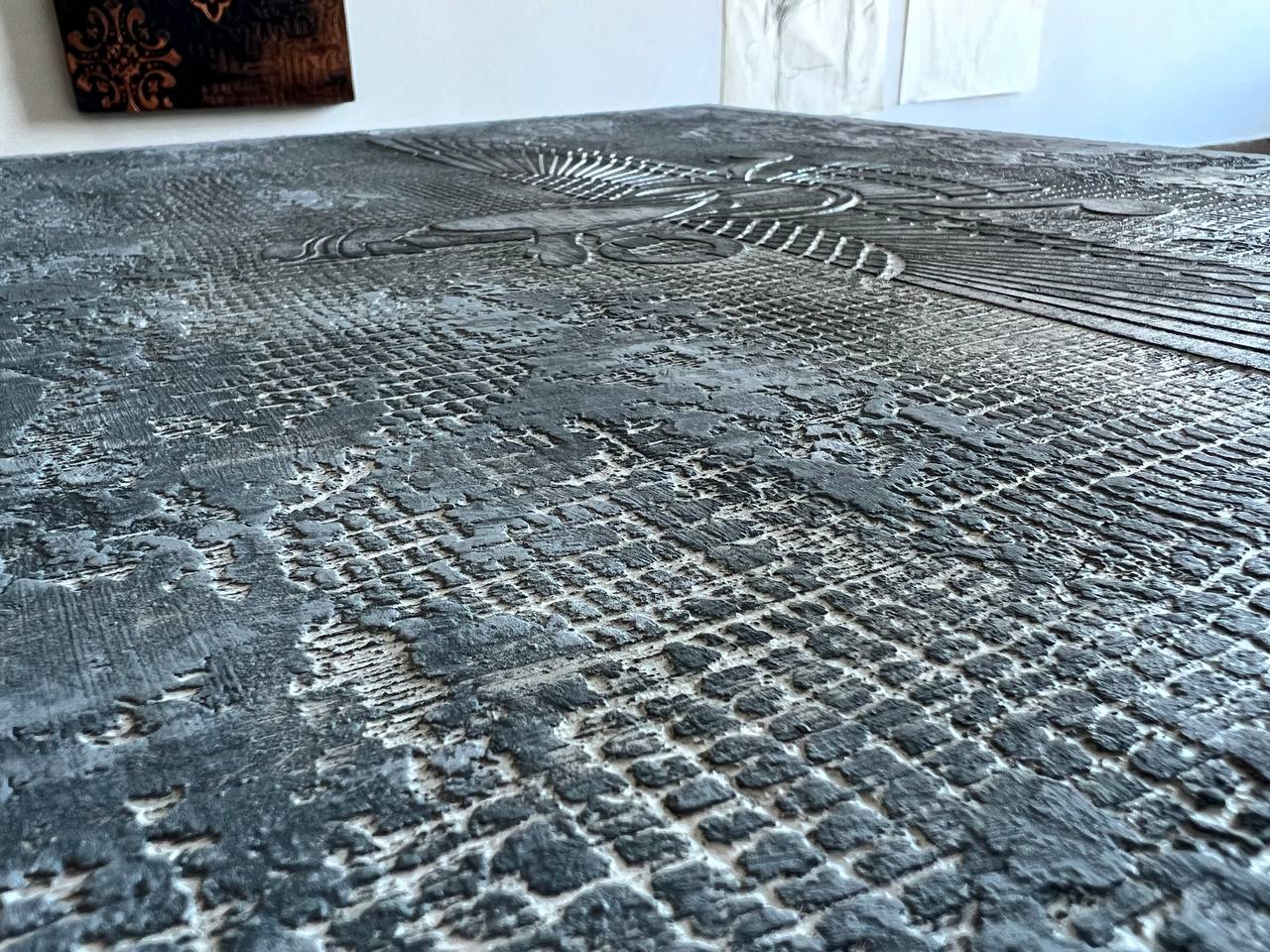
This work does not recreate the Faravahar. It excavates it — as though the figure was always present beneath the surface of the canvas, embedded in the stone of time itself, and the artist’s task was simply to reveal what was already there. The weathered, fractured ground of grey and silver reads like ancient plaster, like the wall of a palace worn by centuries of wind and memory. And from within all that erosion: wings. Still spread. Still rising.
“A civilisation is not what it built. It is what it believed — and what it refused to forget.”
The canvas was prepared with heavy modeling paste across the full surface, worked to create a weathered, stone-like ground with natural fractures and tonal variation throughout. The Faravahar was applied over this living texture using a precisely cut stencil, allowing the relief beneath to show through the form — so the figure appears not painted onto the surface but emerging from within it, as though uncovered rather than made. The monochromatic palette of slate grey, cool white, and silver was built through layered washes and dry-brushing, with selective distressing to deepen the archaeological quality of the surface. A final matte varnish seals the work, preserving the full depth of the texture beneath.
Also on Singulart
This work is listed on the international art platform Singulart with secure payment and global shipping.
View on Singulart →